1. Reminder: CBAM, what is it?
The CBAM (Carbon Border Adjustment Mechanism), or Carbon border adjustment mechanism, is a measure of the European Union aimed at Fight against ‘carbon leaks’. See a previous article, the objective is to charge a carbon price equivalent to that applied to European companies on imports of certain products that are highly emitting CO₂.
In practice, this means that importers of materials such as steel, aluminum, cement or fertilizer must:
- calculate carbon emissions associated with their imports;
- buy CBAM Certificates proportional to these emissions;
- Declare these data each year to the European Commission.
Indeed, since 2023, a transition phase is in progress. CBAM’s final entry into force is scheduled for 2026, but the rules are already changing.

2. What the February 2025 Omnibus Package Changes
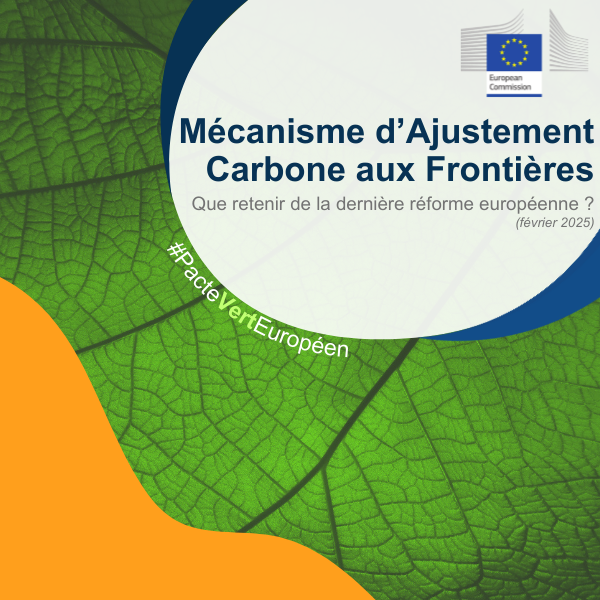
On February 26, 2025, the European Commission announced a series of adjustments as part of its first “Omnibus Package”. Objective: Simplify the implementation of CBAM and Reduce the administrative burden for importers.
At Eastwise, our Quality Director Jay Ren attended a webinar dedicated to these developments. So here are the key changes to remember — and what they mean to you.
CBAM: what’s new
1. An exemption threshold of 50 tonnes
Importers are now exempt from CBAM declaration if the total imported volume per year is less than 50 net tons.
👉 A major relief for small structures and SMEs.
2. Delegation of the possible declaration
An importer may designate a third party as ‘CBAM declaring’, without official accreditation. Eastwise can take on this role for its customers, with their formal permission.
⚠️ The declarant remains legally responsible for the data transmitted.
3. Simplified emissions calculation
Some Emissions related to downstream processing (aluminum, steel) are no longer taken into account.
The Default values no longer require verification by a third party.
👉 Simpler and less expensive steps for importers.
4. Declaration deadline postponed
The deadline for submitting the annual CBAM declaration goes from May 31 to August 31. Also, this gives companies an additional time to compile their data.
5. Fewer certificates to buy
- The minimum rate of certificates to hold goes from 80% to 50% of reported emissions.
- The Previous year data Can be reused for the same products/countries.
- The Carbon price paid in a third country (other than the country of origin) is now taken into account to reduce the certificates to be acquired.
- The Official sale of CBAM certificates is pushed back to February 1, 2027.
👉 a significant reduction in the financial burden for importers.
What does it change for you
These adjustments mark a clear desire of the European Union to make CBAM more accessible, in particular to small structures and non-emissions specialist companies.
For EastWise customers, this means:
- More than Regulatory flexibility
- Less than Administrative charges
- of Easy steps by tailor-made support
Eastwise can act as your CBAM registrant
Good news: No specific accreditation is required to be designated as a CBAM declarant. Thus, EastWise can therefore fulfill this mission for its customers, ensuring the conformity of the declarations and the quality of the data transmitted.
📩 Let’s talk about it!
Are you affected by the CBAM? Do you have any questions? Or do you want to delegate your declaration to a trusted partner?
Our teams are at your disposal.