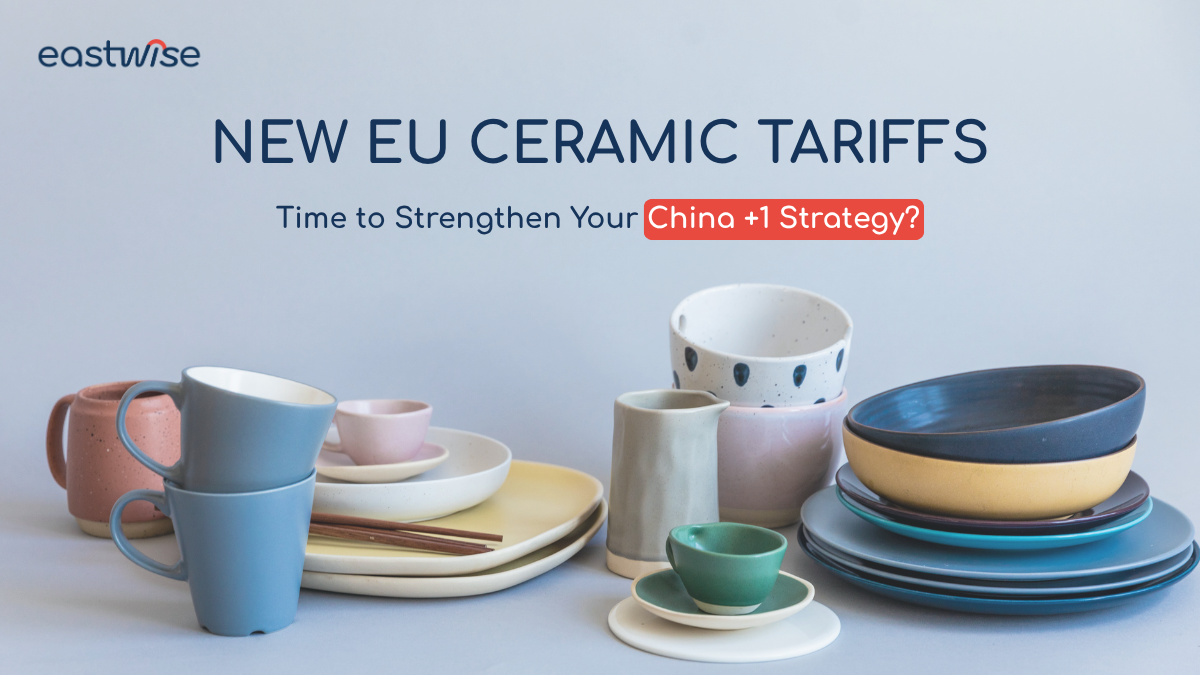
New EU tariffs are changing the game for ceramic tableware and kitchenware buyers
As of April 1st, 2026, European importers of Chinese ceramic tableware and kitchenware face a significant challenge.
The European Union has introduced new anti-dumping duties on ceramic tableware and kitchenware originating from China, with rates reaching up to 79% depending on the supplier. At the same time, the Chinese government has cancelled export tax rebates for ceramic tableware and kitchenware products.
For importers, distributors, and private label brands, the impact is immediate: higher sourcing costs, increased pricing pressure, and the need to reassess existing supply chains.
While these measures specifically target ceramic tableware and kitchenware, they also reinforce a broader trend already shaping global procurement strategies: reducing dependency on a single sourcing country.
Beyond ceramics: another illustration of the China +1 strategy
Over the past few years, many international buyers have adopted a China +1 strategy.
The objective is not to replace China entirely. China’s manufacturing ecosystem, supplier network and production capacities remain unmatched for many product categories.
Instead, the goal is to complement existing sourcing operations by developing alternative supply chains in other Asian countries.
This approach helps companies increase flexibility and resilience when facing geopolitical tensions, tariff changes, anti-dumping measures, or supply chain disruptions.
The new ceramic tariffs are a perfect example of why diversification has become a strategic priority for many buyers.
At EASTWISE, we immediately explored different alternatives to help our clients navigate these changes.
One option involved developing ceramic-look melamine products to completely bypass ceramic tariffs. A second approach focused on identifying qualified ceramic manufacturers outside China.
To support this initiative, we asked Nancy Le, SEA Senior Merchandiser at EASTWISE, to conduct a dedicated sourcing analysis across Southeast Asia.
Why explore alternative ceramic sourcing?
As Nancy explains:
“Due to the anti-dumping tax applied to the ceramic industry in China, our current customers are expected to be significantly impacted. Therefore, finding an alternative sourcing option has become essential.”
The objective was clear: identify manufacturing partners capable of producing ceramic tableware and kitchenware while meeting European quality standards, compliance requirements, and production expectations.
What types of suppliers did we identify?
The research highlighted several promising suppliers across Southeast Asia, including both:
- OEM manufacturers capable of producing according to customer specifications;
- ODM manufacturers offer design, development, and manufacturing capabilities.
According to Nancy, suppliers already working with European customers or internationally recognized brands offer a clear advantage.
“Experience with European markets is important because these suppliers generally have a better understanding of quality expectations, compliance requirements, packaging standards, and project management processes.”
For buyers looking to diversify their sourcing, this experience can significantly reduce transition risks.
 Learn more: OEM vs ODM
Why Southeast Asia is becoming an increasingly attractive option?
Southeast Asia has progressively established itself as a major sourcing hub.
Historically known for competitive labour costs, the region has also strengthened its manufacturing expertise, export capabilities, and production standards.
Today, many suppliers are capable of managing complex product developments, larger production volumes, and demanding international customers.
For ceramic tableware and kitchenware specifically, one country stood out during Nancy’s research.
Thailand: a promising market for ceramic tableware and kitchenware
Among the countries evaluated, Thailand emerged as one of the most attractive alternatives.
Several factors support this assessment.
Access to natural raw materials
Northern Thailand benefits from natural clay resources used in ceramic manufacturing, providing an advantage in terms of raw material availability and cost.
A mature ceramic industry
Thailand has developed a strong ceramic manufacturing sector with experienced workers, established know-how and solid production capabilities.
International market experience
Many Thai manufacturers already supply international brands and export markets, making them familiar with global quality standards and customer expectations.
A competitive sourcing environment
While costs depend on product specifications and production volumes, Thailand offers an attractive balance between manufacturing expertise, quality, and sourcing diversification.
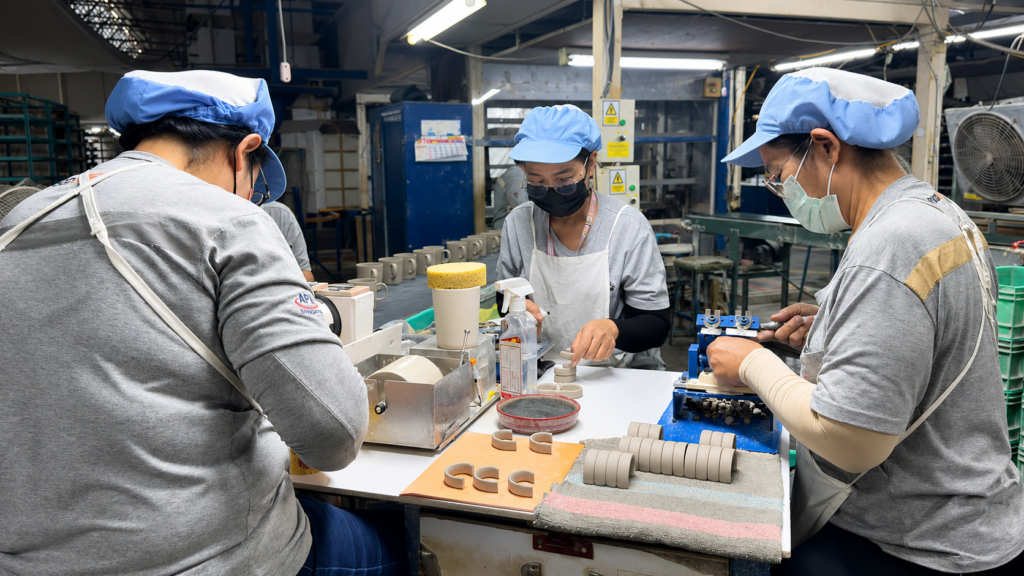
Inside a ceramic factory: Eastwise on the ground in Thailand
Diversification becomes a necessity, not an option
The recent anti-dumping measures highlight a reality that many procurement teams are already facing.
Regulatory changes, trade policies, and geopolitical developments can rapidly affect sourcing costs and supply chain competitiveness.
For companies relying heavily on a single sourcing country, diversification is increasingly becoming a strategic necessity.
The objective is not to move away from China, but rather to build a more balanced and resilient sourcing model.
For many buyers, the question is no longer China or Southeast Asia.
The real question is how to build the right China +1 strategy for your product categories and sourcing objectives?
Looking ahead
Each project ofsupply is different.
The right solution may involve:
- alternative sourcing locations,
- alternative materials,
- dual-sourcing models,
- or a combination of several approaches.
The key is to anticipate market changes before they impact your margins, pricing strategy, or supply continuity.
Ready to challenge your ceramic sourcing strategy?
Our teams in China and Southeast Asia continuously monitor supplier markets, qualify manufacturing partners, and identify alternative sourcing opportunities.
Whether you are considering Thailand, exploring China +1 options, or evaluating alternative materials, let’s discuss your project and identify the sourcing strategy that best fits your objectives.