In international sourcing, quality is often associated with inspections. Yet many quality issues originate long before a finished product reaches the inspection table.
A late-discovered defect can lead to shipment delays, costly rework, customer complaints, product returns, or even damage to your brand reputation. For buyers, procurement managers and B2B distributors, quality is not simply a product issue—it is a business issue.
This is where two essential concepts come into play: Quality Assurance (QA) and Quality Control (QC).
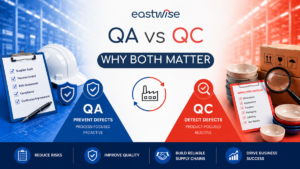
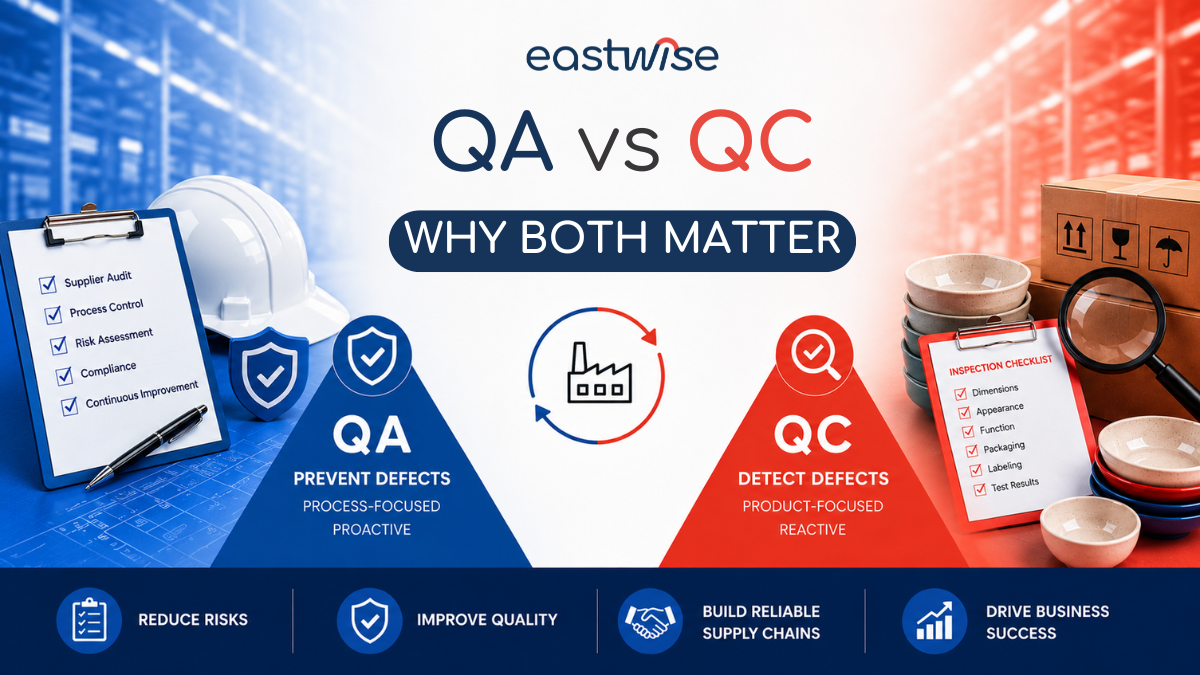
While they are frequently grouped together, they serve different purposes. QA focuses on preventing defects from occurring, while QC focuses on identifying defects before products leave the factory.
Understanding how these two approaches complement each other is key to building a resilient and reliable sourcing strategy.
What Is Quality Assurance (QA)?
Quality Assurance (QA) is a process-oriented and preventive approach to quality management.
The objective of QA is to create the conditions necessary to consistently manufacture products that meet specifications and customer expectations.
Rather than checking products at the end of production, QA focuses on controlling the processes that create those products.
Typical QA activities include:
- Supplier qualification and assessment
- Factory audits
- Product specification reviews
- Risk analysis and mitigation planning
- Manufacturing process validation
- Standard operating procedures (SOPs)
- Compliance and regulatory verification
- Continuous improvement initiatives
In simple terms, QA seeks to answer one question:
“How can we prevent defects from happening in the first place?”
For international sourcing projects, effective QA reduces variability between production runs, improves supplier performance, and lowers long-term quality costs.
What Is Quality Control (QC)?
Quality Control (QC) is a product-oriented and inspection-based approach.
Its purpose is to verify that products manufactured by a supplier conform to agreed specifications before shipment.
QC focuses on identifying defects, deviations, or non-conformities that may have occurred during production.
Typical QC activities include:
- Incoming material inspections
- During Production Inspections (DUPRO)
- Pre-Shipment Inspections (PSI)
- Product testing
- Functional checks
- Packaging verification
- Labeling and marking inspections
- Defect classification and reporting
QC helps answer a different question:
“Did the finished product meet the required standards?”
While QA aims to avoid problems, QC acts as a safeguard that protects buyers from receiving non-compliant products.
QA vs QC: Understanding the Key Difference
Although both contribute to product quality, their roles are fundamentally different.
| Quality Assurance (QA) | Quality Control (QC) |
|---|---|
|
Process-focused |
Product-focused |
|
Preventive |
Detective |
|
Proactive |
Reactive |
|
Focuses on systems and procedures |
Focuses on finished goods |
|
Reduces the likelihood of defects |
Identifies existing defects |
|
Long-term improvement |
Immediate shipment validation |
A simple way to remember the distinction:
QA builds quality into the process. QC verifies quality in the product.
Neither approach can replace the other.
How QA and QC Work Together
The strongest sourcing programs combine both QA and QC throughout the manufacturing cycle.
A typical quality management framework follows four stages:
1. Quality Planning
Clear product specifications, testing requirements, compliance standards, and acceptance criteria are defined before production begins.
2. Process Control (QA)
Manufacturing processes are assessed, monitored, and standardized to reduce risks and improve consistency.
3. Product Inspection (QC)
4. Continuous Improvement
Quality data is analyzed, root causes are identified, and corrective actions are implemented to prevent future issues.
This continuous loop enables suppliers to improve while giving buyers greater confidence in their supply chain.
Common Quality Risks in Manufacturing
Regardless of product category, several quality risks frequently impact sourcing operations.
Process Inconsistency
Variations in machinery, operators, or production methods can create inconsistencies from one production batch to another.
Specification Deviations
Incomplete or ambiguous specifications often result in products that differ from buyer expectations.
Communication Gaps
Misunderstandings between buyers, suppliers, and production teams remain one of the leading causes of quality issues.
Late Defect Detection
Problems identified only at final inspection can significantly impact delivery schedules and increase costs.
The earlier a quality issue is identified, the easier and less expensive it is to resolve.
A Practical Quality Checklist for Buyers
Successful sourcing starts long before production begins.
QA Checklist
Before placing an order, buyers should verify:
- Supplier capabilities and expertise
- Manufacturing capacity
- Product specifications and technical documentation
- Applicable standards and compliance requirements
- Risk assessment and mitigation measures
- Process validation and pilot production results
QC Checklist
Before shipment, buyers should verify:
- Product appearance and dimensions
- Functional performance
- Safety requirements
- Packaging quality
- Labeling accuracy
- Carton specifications
- Shipping marks and packing details
- Product testing results
Combining preventive QA measures with robust QC inspections significantly reduces sourcing risks.
Common Mistakes Buyers Make
Even experienced procurement teams sometimes overlook critical quality fundamentals.
Relying Only on Final Inspection
A pre-shipment inspection can identify problems, but it cannot fix systemic issues that occurred throughout production.
Weak Supplier Qualification
Selecting suppliers solely on price often creates quality challenges later in the sourcing process.
Unclear Specifications
Factories can only manufacture according to the information they receive. Ambiguous requirements often lead to inconsistent outcomes.
No Root Cause Analysis
Correcting a defect without understanding why it occurred increases the likelihood of recurrence.
Quality improvements require both corrective and preventive actions.
Quality Is a System, Not a Checkpoint
Quality should never be viewed as a single inspection before shipment.
Reliable sourcing depends on a complete quality management system that combines prevention, monitoring, inspection, and continuous improvement.
Quality Assurance creates stable manufacturing processes.
Quality Control protects shipments by identifying defects before products leave the factory.
Together, QA and QC help buyers reduce risk, improve supplier performance, and build more resilient supply chains.
At EASTWISE, our teams of QA and QC specialists operate across Asia and North Africa, supporting clients through supplier audits, process assessments, production monitoring, product inspections, and continuous improvement programs.
Need support securing quality across your sourcing operations?
Whether you are onboarding new suppliers, developing private-label products or strengthening existing supply chains, EASTWISE can help you implement effective QA and QC processes on the ground.
Contact our team to discuss your quality requirements and sourcing challenges.